The Teachings (Sebayt) of Amen-em-Ipet: Chapter 1
The Sebayt (Instruction) of Amen-em-Ipet: Over Three Thousand Years Ago
The Sebayt (Instruction) of Amen-em-Ipet (Amenemope) is one of the most significant pieces of Wisdom Literature (Sebayt) from Ancient Kemet. Written by the Scribe Amen-em-Ipet, son of Kanakht (c. 1300 - 1100 BCE, well over three thousand one hundred years ago), it consists of 30 chapters (or houses - hwt) advising his son on how to live a life of Ma’at (truth).

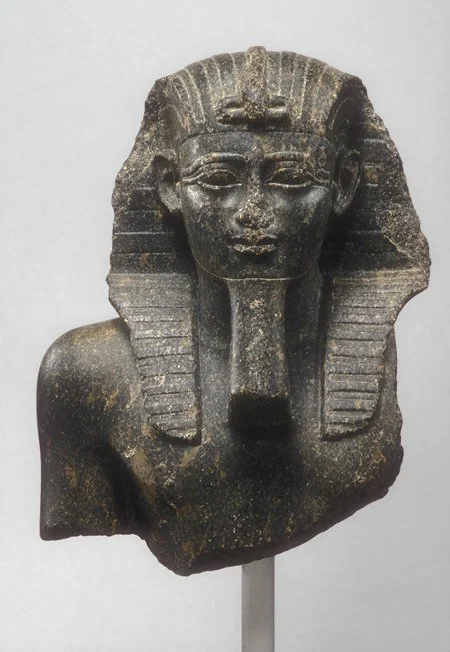
Bust from Statue of a King, third king of Dynasty 26, called the Saite Dynasty after the town of Sais, Late Period, Saite, 664–610 B.C., Reign of Psamtik I, third king of Dynasty 26, Metropolitan Museum or Art, New York. Open Access. Public domain.
Portions of the Instruction of Amen-em-Ipet are embedded in the Book of Proverbs.
It is generally accepted that the author of Proverbs was very aware of famous Kemetic teachings and used them in his work.
For example, Proverbs 22 and 23 bear a remarkable resemblance to this Kemetic teaching (sebayt) of Amen-em-Ipet.
In fact, in Proverbs 22:20 the author says,
"Have I not written for you thirty sayings of admonition and knowledge,” which is a reference to the 30 chapters or houses of the Sebayt of Amen-em-Ipet.
The Sebayt (Instruction) of Amen-em-Ipet (Chapter 1)
Composed by the Scribe Amen-em-Ipet (Amen is in the Sanctuary), son of Kanakht, for his son, Heru-em-maa-kheru (Heru is True of Voice).
Prologue: The Purpose of Instruction
"The beginning of the sebayt (teachings) of life;
the testimonies of safe conduct;
the directions to those who will advise Nswts (Rulers);
the knowledge of how to return the right answer to someone who poses you a question;
the knowledge of how to follow a straight course in life…that will enable you to prosper in life; to stay away from evil and to be honored in the mouths of those who are honorable.
Written by the Overseer of Grains, the Scribe Amen-em-Ipet (Amen is in the Sanctuary), son of Kanakht, justified in Waset (Thebes)."
He Speaks the First Chapter (Chapter or House 1)
“Give your ears, listen to the things that will be said. I pray that you apply your mind and your meditation to the difficult matters I will discuss.
Setting your heart on them (meditating on them) will be advantageous for you–rejecting them will be a calamity.
Keep them in the storehouse of your heart.
They will enable you to respond correctly, when a whirlwind of words are beating in your chest.
They will be a guidepost for your tongue.
If you live your life, each day, by these teachings, you will find them very helpful during life’s trials–they will be a source of strength and safety for you, while you are on earth.”
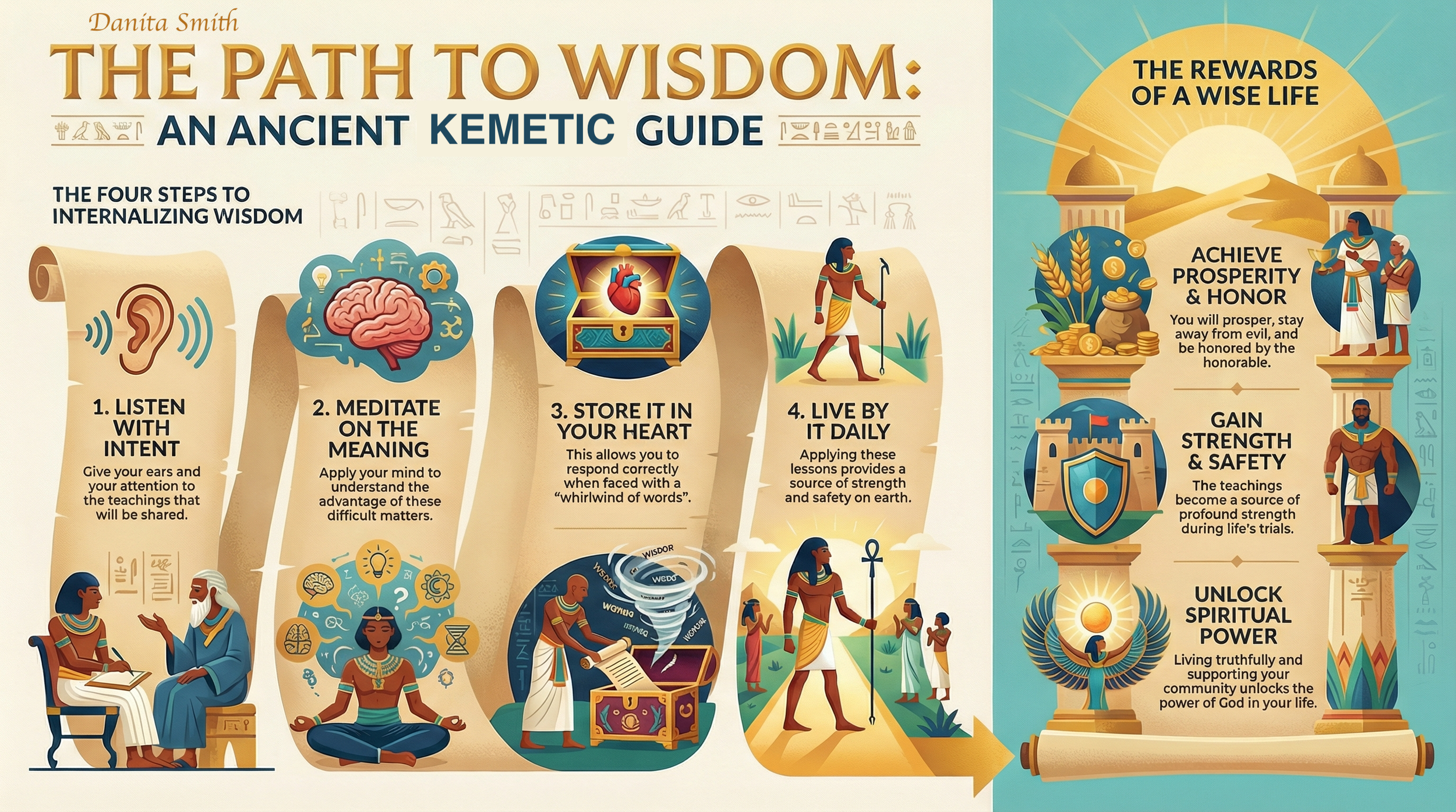
The beginning of this teaching tells us that focusing wisdom (on the advice of your ancestors and elders) sets you up for success. This is not something that comes to you without meditation and prayer–although you can have moments of divine insight–it is something that you must store in your heart and cultivate in your mind.
That means spend all day thinking about them, studying them and praying about their manifestation in your life. It means valuing them and seeing the worth that God associates with them and not the things that people outwardly value. Is being a truthful person truly valuable to you? Is living according to God’s voice and guidance important to you? Is not doing harm to others and supporting the growth and flourishing of the community important to you? These are the people who will be ancestors who are honored, and these are the ones who unlock the power of God in their lives.
Journal about these sayings.
As we walk through these ancient understandings, take yourself through the journey of your own spiritual development.
Think about each chapter, write down what’s important to you and answer the questions in your own writing.
Questions:
Is living according to God’s voice and guidance important to you?
Is not doing harm to others and supporting the growth and flourishing of the community important to you?
Is being a truthful person truly valuable to you?
