The Cradle of Humankind
The text provided here explores the Cradle of Humankind, a vital UNESCO World Heritage site in South Africa that contains a vast portion of the planet's early hominin fossils. The source documents a complex evolutionary timeline, tracing the lineage from the earliest ancestors in Central Africa to the emergence of modern humans. Scientific analysis reveals a "bushy" family tree where diverse species, such as Australopithecus africanus and Homo naledi, existed concurrently rather than in a simple linear progression. Beyond skeletal remains, the text highlights significant behavioral milestones, including the early mastery of fire and the development of sophisticated stone tools. This overview ultimately frames the region as a critical archive for understanding the messy and multifaceted biological origins of humanity.
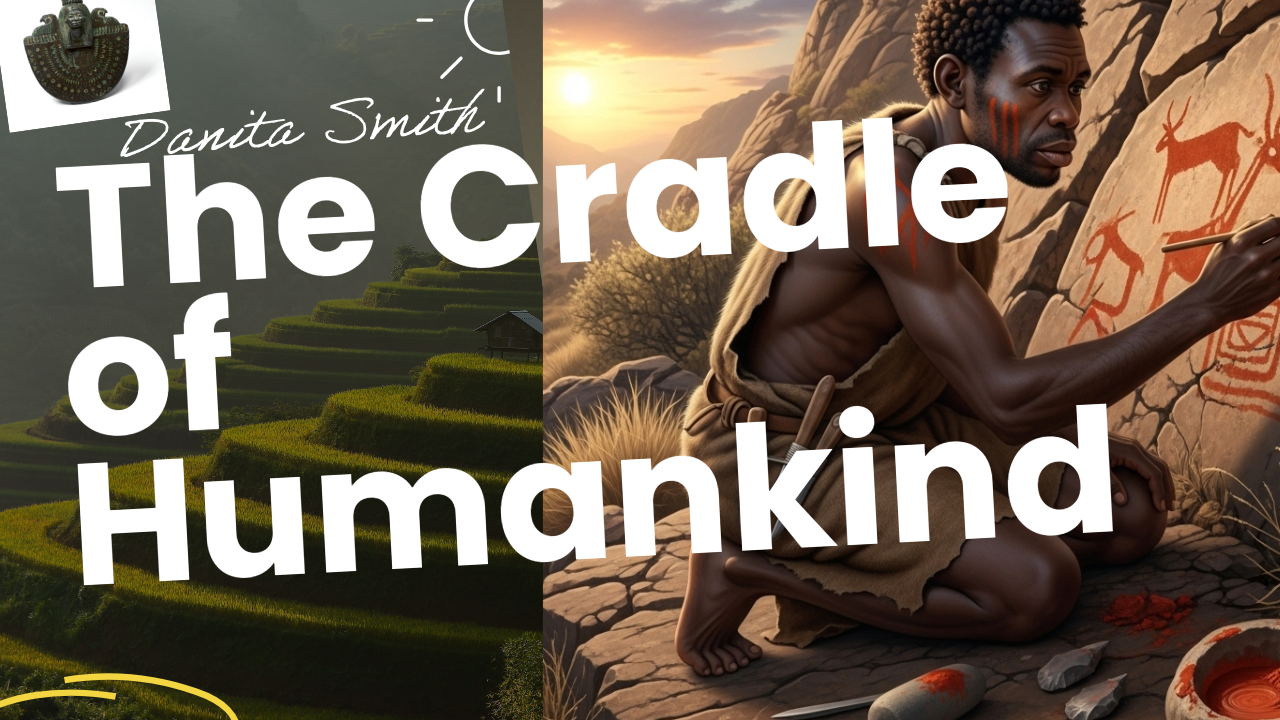
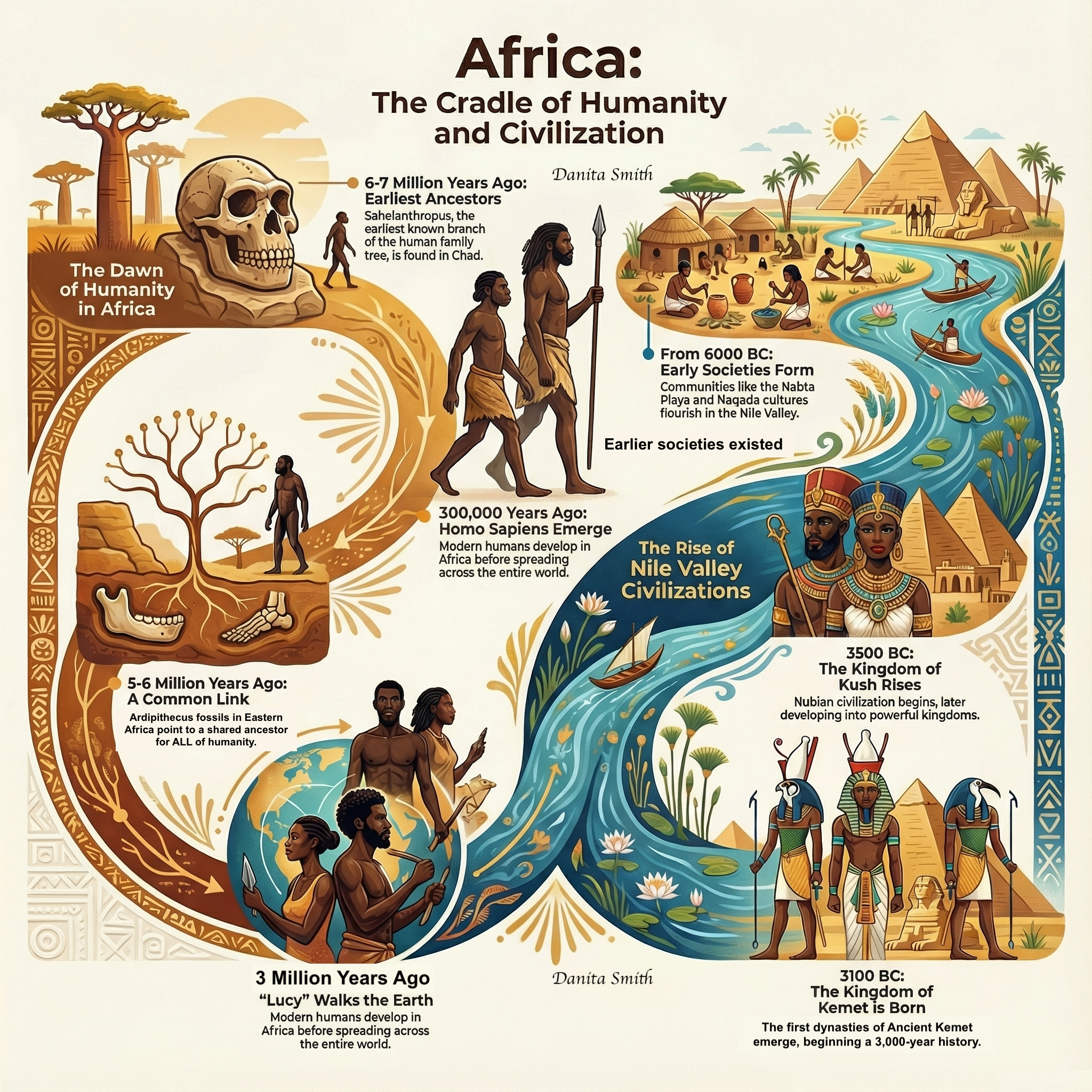
The evidence for human societies dates back hundreds of thousands of years. The societies we see in ancient Kemet and Kush (and around the world) are just the ones whose remains have survived (mostly in stone).
-
✅ A . Fire - The earliest evidence for the controlled use of fire, is found here in the caverns of South Africa.
B. Water
C. Red Ochre